

What Is Importance Level 4 (IL4) and Why It Matters for Critical Infrastructure HVAC
Updated: Oct 13
Key Summary
Importance Level 4 (IL4) is the highest importance classification under Australian structural design standards, applied to facilities that must remain operational following major hazard events such as earthquakes.
IL4 requirements influence both structural and non-structural systems, including HVAC and air handling units, to ensure post-event functionality and life-safety outcomes.
In Australia, IL4 is referenced within NCC 2022 Volume One and supported by AS 1170.4 earthquake action requirements.
Mechanical systems designed for IL4 applications must demonstrate enhanced seismic performance to support business continuity and emergency response.
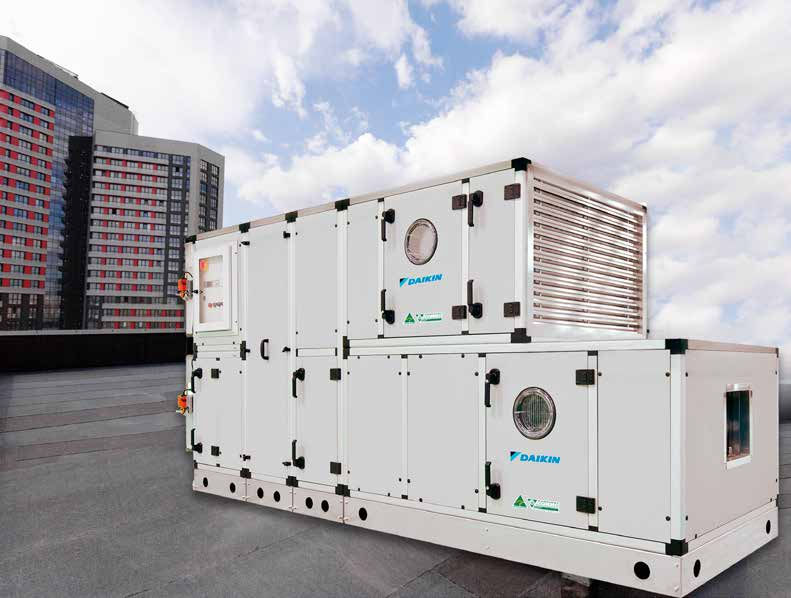
Daikin Australia delivers locally designed and manufactured air handling units engineered to support IL4 building applications and critical infrastructure projects.
What Is Importance Level 4 (IL4)?
IL4 is defined within the AS/NZS 1170 series of Australian Standards and referenced by the National Construction Code (NCC). It is assigned to facilities where continued operation is critical following a natural disaster. This classification affects how both structural and non-structural elements — including mechanical services — must be designed, restrained and validated.
IL4 Requirements in Australia
In Australia, IL4 requirements are outlined under NCC 2022 Volume One, Part B1 – Structural Provisions, and supported by AS 1170.4 for earthquake actions. These provisions align with international seismic design principles and define the performance expectations for essential facilities.
Facilities That Commonly Require IL4 Compliance
Hospitals, emergency medical and trauma centres
Fire, police and emergency response facilities
Critical mechanical plant rooms and backup power installations
Communications and data centres supporting first-response operations
Essential services infrastructure requiring post-disaster functionality
Why IL4 Compliance Matters for Mechanical Systems
For mechanical systems such as air handling units, IL4 compliance directly affects occupant safety, indoor environmental control and operational continuity. Mechanical failure following a seismic event can compromise life-safety systems, disrupt emergency response operations and extend recovery timeframes for critical facilities.
Daikin Australia’s IL4-Compliant AHU Solutions
Daikin Australia is a trusted supplier of HVAC solutions for critical infrastructure and high-reliability environments. Daikin’s locally designed and manufactured air handling units are engineered to support IL4 building applications in accordance with NCC 2022 structural provisions and AS 1170.4 seismic requirements.
"With local AHU production in Sydney, it was critical for us to deliver a solution that can be confidently specified across Australia and across all building types. Achieving IL4 certification was a necessary step to meet that expectation.” Alexandre Stubert – National Airside Manager at Daikin Australia
Applicable Australian Standards for IL4 AHU Design
AS/NZS 1170.0 – Structural design actions – General principles
AS/NZS 1170.1 – Permanent, imposed and other actions
AS/NZS 1170.2 – Wind actions
AS 4100 – Steel structures
AS 3600 – Concrete structures
AS/NZS 4600 – Cold-formed steel structures
AS 1170.4 – Earthquake actions
AS 5216 – Post-installed and cast-in fastenings
Frequently Asked Questions (FAQs)
1. What does IL4 mean under AS 1170?
IL4 represents the highest importance level under AS 1170, applied to facilities that must remain operational following a major hazard event. It increases design actions applied to both structural and non-structural components, including mechanical systems.
2. Does IL4 apply to HVAC and air handling units?
Yes. IL4 applies to non-structural components such as HVAC systems where their continued operation is critical. AHUs must be seismically restrained and designed to remain functional following design-level earthquake events.
3. Which standards govern IL4 mechanical compliance in Australia?
IL4 mechanical compliance is primarily governed by NCC 2022 Volume One, AS 1170.4 for earthquake actions, and supporting structural standards such as AS 4100, AS 3600 and AS 5216 for anchorage and support systems.
4. Do all hospitals and data centres require IL4 compliance?
Most hospitals, emergency response facilities and mission-critical data centres are classified as IL4 under the NCC. Final importance level classification should be confirmed by the project structural engineer and building certifier.
5. How is IL4 compliance verified for AHUs?
IL4 compliance is verified through engineering analysis, seismic calculations, certification documentation and validation against AS 1170.4 requirements. This may include assessment of anchorage, bracing and equipment performance.
6. Can IL4 requirements be addressed after construction?
Retrofitting IL4 compliance after construction is significantly more complex and costly. Early consideration during design and procurement is strongly recommended to reduce risk and approval delays.


Comments